Rehabilitation for Gastrocnemius Muscle Contraction
Introduction
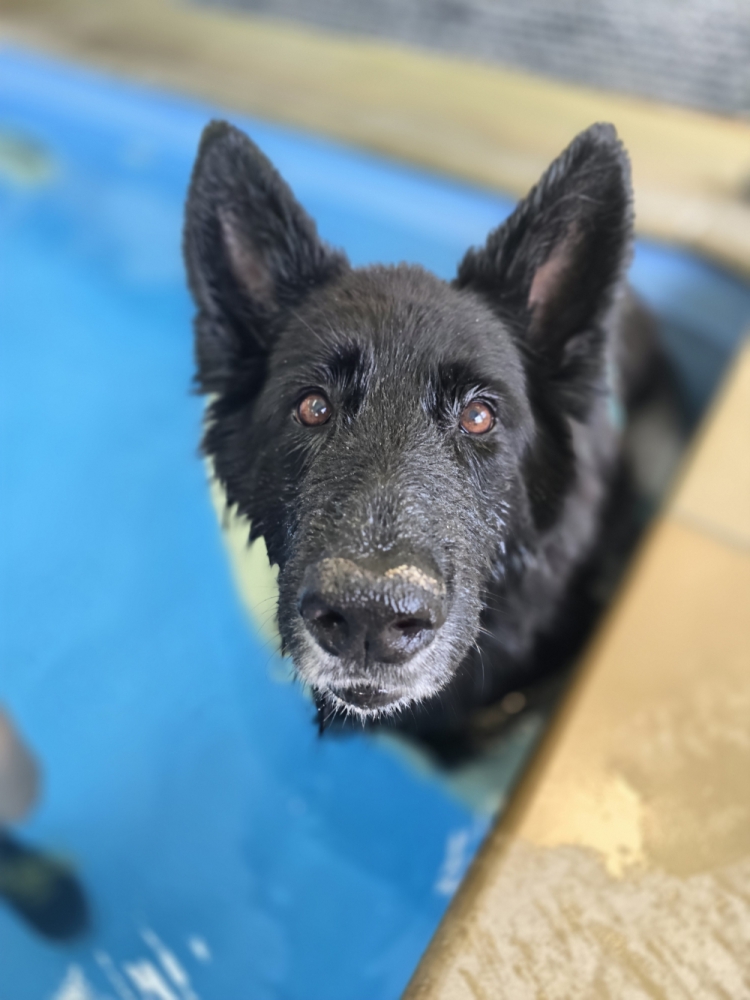
Pepper is a 9-year-old black German Shephard who was referred to us in 2023 following a diagnosis of a Gastrocnemius Muscle Contraction. The Gastrocnemius muscle in a dog is the chief muscle of the calf in the hindlimb. Its role is to extend the tarsal joint and flex the stifle joint. Pepper is receiving care to manage her Gastrocnemius Muscle Contraction and maintain her overall mobility and comfort. The combination of Myotherapy Massage, Hydrotherapy, and LASER treatments provide her with significant benefits, aiding with her overall comfort and mobility. Pepper enjoys Myotherapy Massage on a maintenance basis where we work to help reduce the tension through the muscles reflective of muscular contractions.
Treatment Plan
We began Pepper with an intense plan of solely Myotherapy Massage in order to get a handle on her muscular changes both through the gastrocnemius muscles but also through the surrounding muscle structures due to compensation for her gait changes. Myotherapy Massage helps to reduce tension and stiffness in Pepper's muscles, improving her overall muscle flexibility and reducing pain.
Once we had developed more supple muscular structures, we moved Pepper into our Hydrotherapy Pool to enhance her range of motion and encourage a more stimulated use of the hindlimbs. Hydrotherapy, on the other hand, can be highly beneficial for strengthening muscles, improving range of motion, and encouraging proper limb use without putting excessive strain on her joints.
LASER therapy also helps to reduce inflammation and promote tissue healing, further aiding in her comfort and mobility.
Progress and Outcome
Pepper continues to visit us on a weekly basis for Hydrotherapy as her owner truly feels that she reaps huge benefits from consistent therapy. She has LASER treatment fortnightly prior to her Hydrotherapy sessions and enjoys Myotherapy Massage on a maintenance basis. Being a large breed and moving through her years, we feel it is important to maintain her regular treatment plan to support her mobility and reduce the chances of the Gastrocnemius muscles developing changes as severe as they once were.
Conclusion
Consistency in her treatment plan seems to be key in managing Pepper's condition and preventing the development of severe muscular changes. As she ages, it's essential to continue monitoring her condition and adjusting her therapy as needed to ensure she remains comfortable and mobile.
Pepper's owner is committed to her care and recognizes the benefits of regular therapy sessions. With ongoing treatment and monitoring, Pepper can continue to enjoy a good quality of life despite her condition.